
The Group of Seven transformed how the world sees the Canadian wilderness, and nowhere can you experience their legacy more powerfully than by standing where these artists once stood, surrounded by the very landscapes they immortalized on canvas. Between 1920 and 1933, this collective of visionary painters ventured deep into Ontario’s rugged backcountry, capturing the raw beauty of ancient rock, windswept pines, and vast northern skies in a bold new style that would define Canadian art for generations.
What makes their work so significant? The Group of Seven rejected European academic traditions to create something entirely new: a distinctly Canadian visual language that celebrated the untamed wilderness rather than domesticated pastoral scenes. Their vibrant colors, dramatic compositions, and expressive brushwork captured the essence of a young nation searching for its own identity. Artists like Tom Thomson, Lawren Harris, and A.Y. Jackson didn’t just paint pretty pictures. They created a national mythology, transforming the Canadian Shield from an economic obstacle into a source of cultural pride.
Today, Ontario offers something truly remarkable for art lovers and outdoor adventurers alike: the chance to trace the footsteps of these legendary painters through living outdoor galleries. You can paddle the same waters of Algonquin Park where Tom Thomson sketched his final masterpieces, hike to the Georgian Bay shores that captivated A.Y. Jackson, or explore the wild beauty of Lake Superior’s coastline that inspired Lawren Harris’s most spiritual work.
This journey combines cultural enrichment with genuine adventure. You’re not viewing these paintings behind museum glass. You’re experiencing them in the crisp air, changing light, and profound silence that shaped their creation.
The Artists Who Painted Canada’s Soul
In the early 1920s, seven Toronto-based artists made a decision that would forever change how Canadians, and the world, saw their country. Franklin Carmichael, Lawren Harris, A.Y. Jackson, Frank Johnston, Arthur Lismer, J.E.H. MacDonald, and Frederick Varley rejected the polished European aesthetic dominating galleries at the time. Instead, they strapped canvases to their backs and headed into Ontario’s untamed wilderness, determined to capture something raw and essentially Canadian.
Their timing was perfect. A young nation, barely fifty years old, was searching for its own cultural identity. These artists found it in the windswept pines of Georgian Bay, the autumn blaze of Algonquin hardwoods, and the stark granite shields of Northern Ontario. They painted with bold, almost defiant strokes, vibrant colours that shocked critics used to muted pastoral scenes. A pine tree wasn’t just green; it was alive with movement, twisted by northern winds into sculptural forms that demanded attention.
What made them revolutionary wasn’t just their subject matter, but their conviction that Canadian wilderness deserved the same reverence European artists gave to rolling countryside and ancient architecture. They argued that Canada’s rugged beauty was worthy of celebration, not something to be tamed or prettied up for polite society.
The art establishment initially dismissed their work as crude and unfinished. The public, however, responded differently. Ordinary Canadians saw their own backyards elevated to high art, the rocky shores they’d camped beside, the forests they’d walked through, suddenly rendered magnificent on gallery walls.
Tom Thomson, though he died before the Group officially formed in 1920, was their spiritual anchor. His intimate knowledge of Algonquin Park and his bold technique influenced every member. The Group continued painting together and exhibiting until 1933, but their impact extends far beyond those thirteen years. They created a visual language for Canada itself, one that still shapes how we see our landscape today.
The Group of Seven Outdoor Gallery Experience
Where Art Installations Meet Natural Wonder
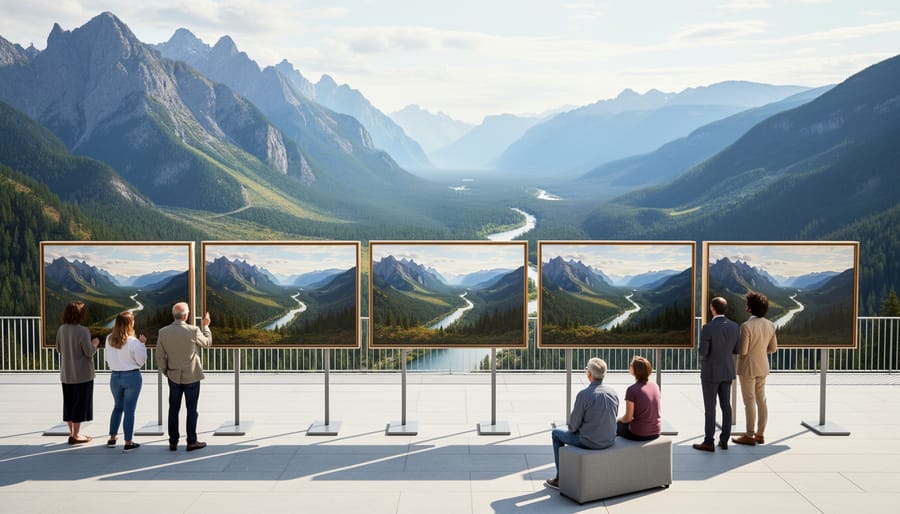
The Group of Seven Outdoor Gallery transforms highway pull-offs and trailheads into open-air exhibition spaces where massive steel-framed reproductions of the artists’ paintings stand precisely where they once set up their easels. Each installation features the original artwork at eye level, mounted to withstand Ontario’s harsh weather while inviting you to hold the painted scene against the actual vista stretching before you.
These aren’t casual plaques, they’re substantial installations measuring several feet across, positioned after careful research into the artists’ documented painting locations and viewpoints. The frames angle to match the artist’s perspective, creating an uncanny alignment between brushstroke and reality. Stand at Tom Thomson’s installation near Canoe Lake, and the twisted pine in his painting mirrors the descendants of that same tree still clinging to the rocky outcrop.
What makes this concept extraordinary is its refusal to confine art within gallery walls. The installations embrace weather, changing light, and seasonal transformation, the very conditions that challenged and inspired the Group of Seven. Visit in autumn and you’ll see why they obsessed over Ontario’s blazing maples. Return in winter and understand their fascination with snow-laden spruces against grey skies.
The effect is revelatory rather than merely educational. You’re not reading about artistic technique, you’re standing inside the frame, experiencing the marriage of observation and imagination that created these national treasures.
Key Locations Along the Trail
The Outdoor Gallery stretches across Highway 60 through Algonquin Park’s spectacular 56-kilometre corridor, offering thirteen distinct installations where you can stand before the exact scenes that sparked artistic genius. Each stop pairs reproduction panels with the wilderness vistas that inspired them, creating moments of profound recognition as painted scenes materialize before your eyes.
Start at the eastern entrance near the East Gate, where A.Y. Jackson’s “Smoke Lake” introduces visitors to the park’s iconic rolling hills and reflective waters. The installation sits at a viewpoint overlooking the lake itself, allowing you to trace Jackson’s brushstrokes against the living landscape. Early morning visits reward you with mist-shrouded scenes that mirror the atmospheric quality of the original paintings.
Further west, the “Jack Pine Lookout” presents Tom Thomson’s most famous work alongside the windswept shoreline that inspired it. Standing here, you understand why Thomson chose this particular jack pine, twisted, resilient, dramatically silhouetted against water and sky. The installation includes interpretation about Thomson’s techniques and his deep connection to this specific stretch of wilderness.
The Lake of Two Rivers stop showcases multiple Group of Seven interpretations of this beloved location, demonstrating how different artists perceived the same landscape through their unique visions. Nearby picnic facilities make this an ideal lunch spot where you can linger with the art.
At Canoe Lake, the trail’s emotional heart, several installations commemorate Thomson’s final painting location. The area draws pilgrims seeking connection with the artist who died mysteriously in these waters in 1917, his legacy forever intertwined with Algonquin’s beauty.
Iconic Ontario Landscapes That Inspired Masterpieces
Three distinct Ontario regions captured the Group of Seven’s imagination so completely that they became synonymous with Canadian art itself. Each landscape offered something different: Algonquin Park’s dense forests and mirror-like lakes, Georgian Bay’s windswept pines clinging to ancient rock, and Algoma’s dramatic river valleys cutting through autumn-blazed hillsides. These weren’t polite, pastoral scenes, they were raw, powerful places that demanded a new visual language.
Algonquin Park became the group’s spiritual home, particularly for Tom Thomson, whose brief but brilliant career there between 1912 and 1917 established the visual vocabulary others would follow. The park’s interior lakes, Canoe Lake, Oxtongue, Smoke Lake, provided endless subject matter. Stand at a Algonquin lookout today and you’ll recognize the layered ridges Thomson painted, the jack pines silhouetted against evening skies, the way morning mist clings to water. The landscape hasn’t been tamed or developed; it remains the untouched wilderness that first inspired these artists.
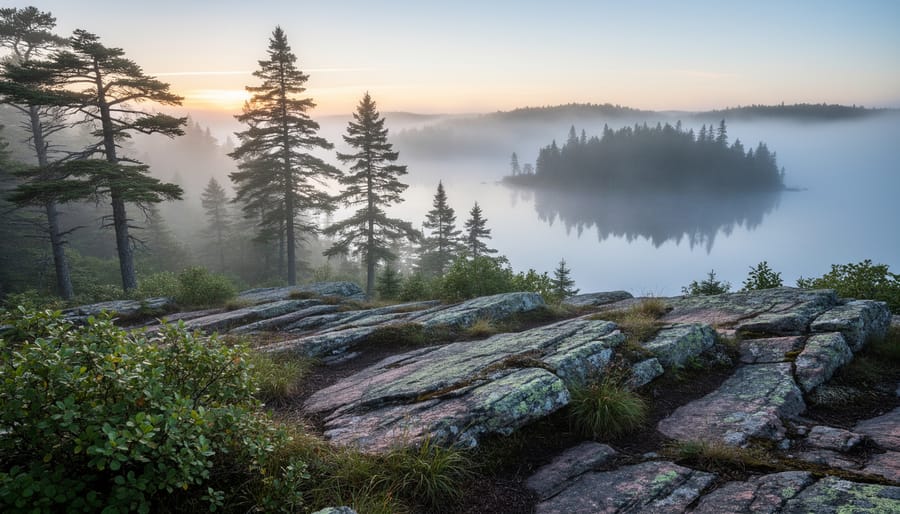
Georgian Bay’s eastern shore offered something Algonquin couldn’t: the meeting of ancient Canadian Shield granite and vast open water. A.Y. Jackson, Arthur Lismer, and Frederick Varley were drawn to this collision of elements. The twisted white pines growing from bare rock became iconic symbols of resilience, the pink and grey granite glowing in late afternoon light, the bay’s moods shifting from glassy calm to storm-driven fury. Places like Killarney and the French River still showcase these characteristic formations, where 2.7-billion-year-old bedrock shapes every vista.
| Artist | Signature Location | Notable Works | What to See Today |
|---|---|---|---|
| Tom Thomson | Algonquin Park | The Jack Pine, Northern River | Canoe Lake, original pine stands, interior waterways |
| Lawren Harris | Lake Superior (North Shore) | North Shore, Lake Superior, Lake and Mountains | Rugged shoreline, isolated islands, dramatic weather |
| A.Y. Jackson | Georgian Bay / Algoma | The Red Maple, Terre Sauvage | Windswept pines on rock, autumn hardwood forests |
| J.E.H. MacDonald | Algoma Region | The Solemn Land, Falls, Montreal River | Montreal River valley, cascading waterfalls, mixed forests |
Algoma, northeast of Lake Superior, completed the trinity. This region’s autumn spectacle, hardwoods exploding in crimson, orange, and gold against dark evergreens, produced some of the group’s most vibrant canvases. J.E.H. MacDonald and Lawren Harris made repeated expeditions here between 1918 and 1922, working from a converted railway boxcar. The Montreal River’s waterfalls, the rail line cutting through wilderness, and the sheer intensity of seasonal colour made Algoma irresistible. Today’s visitors find those same dramatic river gorges and the kind of untouched forest expanses that urban southern Ontario has long since lost.
Planning Your Art-Inspired Ontario Adventure
Complementary Cultural Experiences
After immersing yourself in the landscapes that inspired these iconic artists, seeing their original works in person completes the circle of understanding. The McMichael Canadian Art Collection in Kleinburg stands as the definitive Group of Seven destination, housing the world’s largest permanent collection of their paintings. Here, you’ll trace the evolution of their artistic vision across dedicated galleries, with works hung in a setting that echoes the wilderness aesthetic they championed.
In downtown Toronto, the Art Gallery of Ontario devotes entire rooms to the Group of Seven, contextualizing their revolutionary approach within Canada’s broader art history. The gallery’s Canadian Wing places their bold brushstrokes alongside contemporary Indigenous art and earlier colonial works, revealing just how radical their wilderness celebration was for its time.
For a more intimate experience, the Thunder Bay Art Gallery showcases works connected to the region’s dramatic Lake Superior landscapes, while the Tom Thomson Art Gallery in Owen Sound offers deep insights into the movement’s spiritual forefather. Many smaller regional galleries throughout Ontario rotate Group of Seven pieces through their collections, check ahead for current exhibitions.
Consider timing your visit around special exhibitions or curator-led talks that explore specific paintings or periods. Many galleries offer smartphone apps with detailed artwork analysis, allowing you to compare what you’ve just witnessed in nature with how the artists translated those vistas onto canvas decades ago.
Connecting With Local Artists and Communities
Contemporary artists continue the Group of Seven’s tradition across Ontario, offering visitors authentic ways to engage with the region’s artistic legacy. Many painters work en plein air in the same locations that inspired the original masters, and several welcome travelers to join them for workshops or informal painting sessions.
The Tom Thomson Art Gallery in Owen Sound runs weekend workshops where participants paint Georgian Bay’s rocky shores alongside experienced instructors who’ve spent decades interpreting these landscapes. Algonquin Art Centre offers drop-in sessions during summer months, providing easels, materials, and guidance for first-time painters wanting to try capturing the park’s essence on canvas.
Local communities host annual events that celebrate this heritage. The Festival of the Sound in Parry Sound blends classical music with visual arts each July, while Huntsville’s Muskoka Plein Air Festival brings dozens of artists to paint publicly throughout September, letting visitors watch the creative process unfold and purchase works completed on-site.
Indigenous artists across the region offer perspectives that acknowledge the lands the Group of Seven painted were ancestral territories. Their workshops and gallery talks add crucial dimensions to understanding these landscapes beyond the settler-colonial lens, enriching the cultural conversation around Ontario’s iconic scenery.
These connections transform passive observation into active participation, letting you join the ongoing story of artists responding to the same powerful landscapes that shaped Canadian visual identity a century ago.
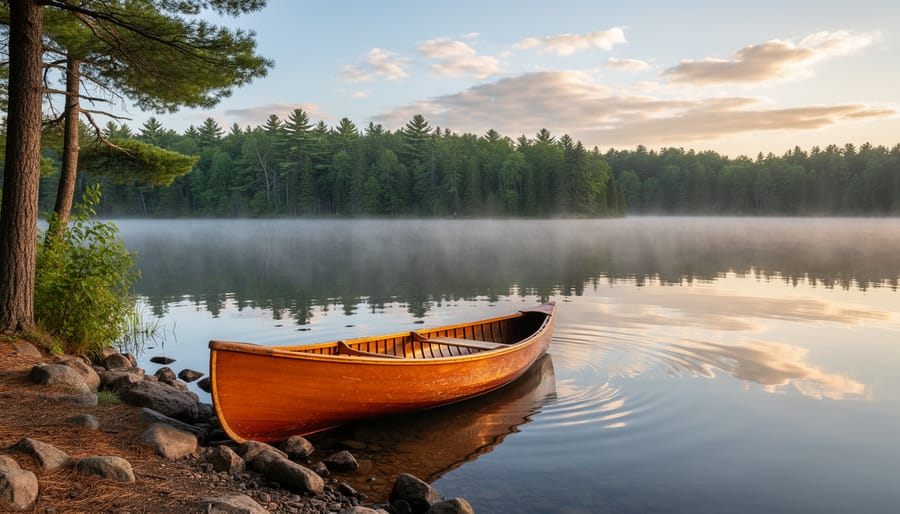
Standing at one of the Group of Seven Outdoor Gallery installations, with a century-old painting beside you and the actual vista stretching before your eyes, something shifts. The boundary between art and nature dissolves. You’re not just looking at a landscape, you’re inside the vision that defined a nation’s identity.
This isn’t passive tourism. Walking where Lawren Harris captured the stark geometry of northern shorelines, or where Tom Thomson paddled before painting his final canvases, you enter into a conversation that spans generations. The rocks haven’t changed. The pines still bend in the same winds. What the Group of Seven saw in these places, the raw power, the untamed beauty, the spiritual dimension of wilderness, remains accessible to anyone willing to make the journey.
Their paintings hang in galleries worldwide, but experiencing the source gives you something museums can’t. You understand why these artists returned season after season, why they abandoned comfortable studios for bug-infested camps, why they believed this landscape demanded a new visual language. Standing in Algonquin’s interior or along Georgian Bay’s granite shores, you feel that same pull toward something larger than yourself.
Ontario’s Group of Seven country offers a rare gift: the chance to witness the birthplace of an artistic revolution that’s still unfolding. Contemporary painters continue working these same locations, finding fresh perspectives on familiar terrain. The landscapes endure. The inspiration renews itself with every visitor who stops, looks deeply, and sees Canada as these artists taught us to see it, majestic, mysterious, unmistakably our own.