
The McMichael Canadian Art Collection houses the world’s most comprehensive public collection of works by Canada’s iconic Group of Seven painters, alongside expansive Indigenous and contemporary Canadian art, all set within a stunning 100-acre forested estate just 40 kilometers northwest of Toronto in Kleinburg, Ontario. This isn’t a typical urban gallery experience. The building itself, constructed from hand-hewn logs and native stone, was purpose-designed to showcase Canadian art in harmony with the landscape that inspired it, creating an immersive cultural encounter where the boundary between art and nature beautifully dissolves.
Founded in 1965 by collectors Robert and Signe McMichael, who donated their home and collection to the Province of Ontario, the gallery now holds over 6,500 artworks. Visitors walk through intimate, wood-paneled rooms where iconic paintings by Tom Thomson, Lawren Harris, and Emily Carr hang beside Indigenous works that tell deeper, more complex stories of this land. The outdoor sculpture garden and forest trails extend the artistic journey beyond gallery walls, while seasonal exhibitions bring fresh perspectives to Canadian art history.
Whether you’re an art enthusiast seeking Canada’s visual heritage or a traveler looking for an authentic cultural experience outside Toronto’s city center, the McMichael delivers both contemplative beauty and educational depth. Plan for at least three hours to fully appreciate the permanent collections, special exhibitions, and the remarkable natural setting that makes this destination genuinely distinctive among North American art institutions.
A Living Gallery Nestled in the Forests That Inspired It
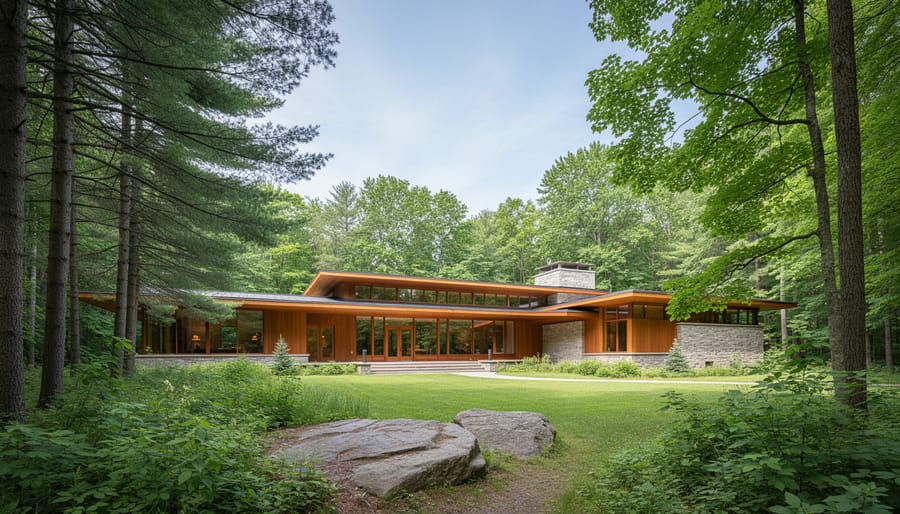
Forty minutes north of Toronto, the McMichael Canadian Art Collection occupies 100 acres of Humber River valley forest where the Ontario landscape transforms from backdrop to co-curator. The gallery’s hand-hewn stone and timber architecture emerges from the woodland like a natural extension of the terrain, its walls punctuated by floor-to-ceiling windows that frame living compositions of pine, birch, and granite outcrop. This is where wilderness meets canvas in the most literal sense.
Standing before a Lawren Harris canvas of northern pines, you can turn to the window and see those same trees swaying outside. Tom Thomson’s iconic autumn maples glow with the same golden light filtering through the gallery’s massive timber beams. The architecture never competes with either view. Instead, rough-cut logs and fieldstone walls echo the textures Thomson and the Group of Seven captured in their bold, expressive brushwork, creating a spatial dialogue between the art, the building, and the landscape beyond.
This integration was entirely deliberate. Gallery founders Robert and Signe McMichael designed their collection around the radical idea that Canadian art should be experienced within the environment that inspired it. Walking from gallery to gallery, you’re tracing the same creative journey the artists took from studio to wilderness and back again. The building breathes with seasonal shifts, its stone floors cool in summer, its massive fireplaces radiating warmth when snow blankets the trails outside.
The experience transcends typical museum visits. You’re not simply viewing representations of the Canadian landscape but inhabiting the same visual and emotional space that shaped these artists’ revolutionary vision of their country.
The Group of Seven: Canada’s Artistic Revolution on Display
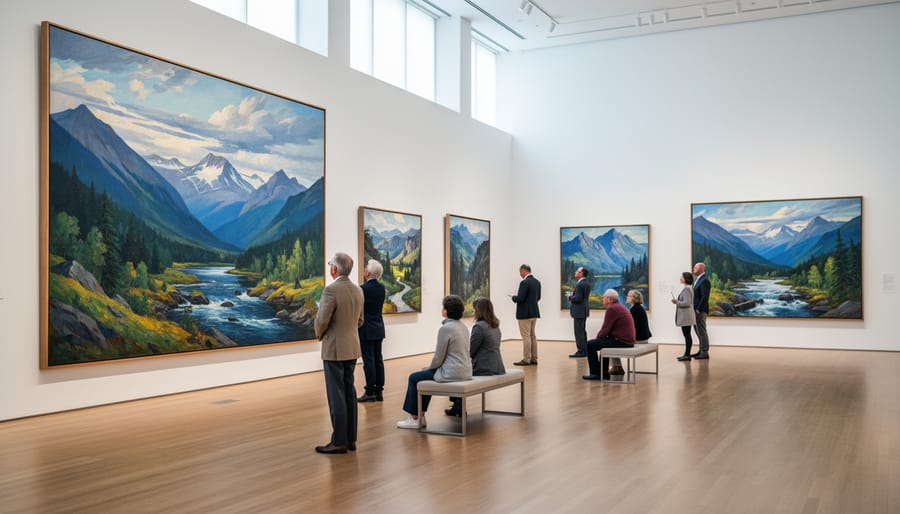
Walking through the McMichael’s galleries devoted to the Group of Seven feels like stepping into the heart of a revolution that forever changed how Canadians see their own landscape. Before these seven artists picked up their brushes in the early 20th century, Canadian art largely imitated European traditions. Tom Thomson, Lawren Harris, A.Y. Jackson, Arthur Lismer, Frederick Varley, Frank Johnston, and Franklin Carmichael saw something different in the rugged Canadian wilderness: raw beauty that demanded its own visual language.
The collection here isn’t just comprehensive, it’s deeply personal. These artists were friends of the gallery’s founders, Robert and Signe McMichael, who acquired works directly from the painters and their families. Standing before Lawren Harris’s stark, spiritual mountain scenes, you’re viewing canvases that once hung in the artist’s own studio. The bold colours and simplified forms that shocked critics in 1920 now feel like visual truth, capturing the essence of Canadian Shield granite, northern lakes, and endless boreal forests.
What makes the McMichael experience extraordinary is the context it provides. You’re not simply looking at paintings on white walls. Information panels share stories of canoe trips into Algonquin Park, the camaraderie in Toronto’s Studio Building, and the harsh criticism these artists faced for abandoning traditional techniques. Tom Thomson’s iconic sketches reveal how he captured fleeting light on jack pines during grueling backcountry expeditions. A.Y. Jackson’s winter landscapes, painted in colours critics called garish, now seem perfectly attuned to the brilliant blues and purples that actually appear in snow under Canadian light.
The Group of Seven journey comes alive here through rotating displays that prevent the collection from feeling static. Some visits might emphasize early experimental works, while others highlight mature masterpieces. The McMichael owns over 6,000 artworks, with the Group of Seven and Tom Thomson holdings forming the world’s most significant concentration of these artists’ work.
For visitors following Ontario’s Group of Seven artistic trail, the McMichael represents the ultimate destination, where you can trace the complete evolution of a movement that gave Canada its first distinct artistic voice.
Beyond the Seven: Indigenous Art and Contemporary Canadian Voices
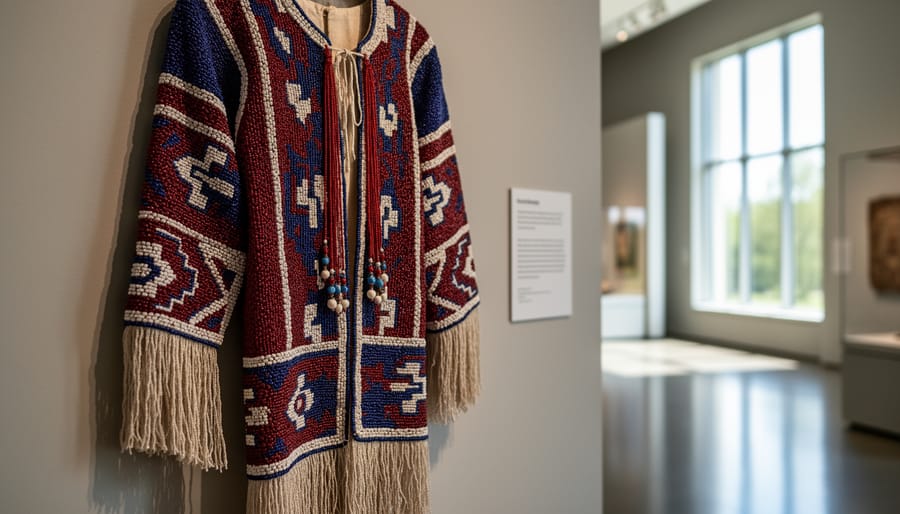
While the Group of Seven changed how Canadians saw their landscape, the McMichael Canadian Art Collection offers something far richer: a canvas that reflects the country’s full artistic soul. The gallery’s Indigenous art collection stands as one of its most vital treasures, presenting over 1,000 works that span historical pieces through to bold contemporary expressions. This isn’t art relegated to a separate wing or treated as an afterthought. These works hold equal prominence, challenging visitors to reconsider whose stories have shaped Canadian identity.
Walk through these galleries and you’ll encounter stunning works by artists whose names deserve the same recognition as any Group of Seven painter. The collection includes pieces by:
- Norval Morrisseau, the Anishinaabe artist who founded the Woodland School of painting with his vibrant spiritual imagery
- Daphne Odjig, whose powerful fusion of traditional Odawa-Potawatomi imagery with contemporary styles broke new ground
- Bill Reid, the Haida master whose sculptural works and jewelry redefined Northwest Coast art
- Kenojuak Ashevak, the Inuit artist whose prints and drawings brought Arctic perspectives to international audiences
- Carl Beam, who pioneered multimedia approaches combining photography, painting, and text to address cultural identity
The gallery’s contemporary Canadian collection extends this commitment to diverse voices. You’ll find works by artists like Kent Monkman, whose provocative paintings reimagine historical narratives, and Rebecca Belmore, whose installations confront colonial legacies head-on. These aren’t token additions. They’re essential conversations happening on the same walls where Tom Thomson’s sketches hang.
What makes this approach powerful is the McMichael’s recognition that Canadian art didn’t emerge from wilderness landscapes alone. It grew from thousands of years of Indigenous creative practice, from immigrant experiences, from voices that mainstream galleries once ignored. The collection keeps expanding, actively acquiring works that challenge comfortable narratives and push artistic boundaries. For travelers wanting to understand Canada beyond postcard clichés, these galleries deliver the complex, sometimes uncomfortable, always compelling reality of a nation still discovering itself through art.
Transformative Experiences: Programs, Events, and Special Exhibitions
The McMichael Canadian Art Collection extends far beyond static gallery walls, transforming each visit into an active cultural encounter through its dynamic programming calendar. Throughout the year, visitors discover exhibitions that rotate seasonally, bringing fresh perspectives to familiar collections and introducing emerging artists alongside established masters.
Special exhibitions typically run for several months, allowing the gallery to explore specific themes, artists, or movements in depth. These curated showcases might spotlight a single Group of Seven member’s lesser-known works, examine contemporary Indigenous art practices, or trace the evolution of landscape painting across generations. The rotating nature means return visitors encounter something new with each trip, while first-timers benefit from exhibitions designed to complement the permanent collection.
Artist talks and curator-led tours offer insider perspectives that illuminate the stories behind the art. These interpretive programs reveal the techniques, inspirations, and challenges artists faced, transforming how visitors see the works. Gallery educators lead guided experiences that help travelers connect emotionally with pieces they might otherwise pass by, particularly valuable for those new to Canadian art history.
Hands-on workshops invite visitors to engage creatively, from sketching sessions in the sculpture garden to painting techniques inspired by Group of Seven approaches. Family programs make art accessible to younger visitors through interactive activities, treasure hunts, and storytelling sessions that bring Canadian artistic heritage to life.
The McMichael also hosts cultural celebrations, outdoor concerts in warmer months, and seasonal events that blend art with Ontario’s natural rhythms. Film screenings and lecture series dive deeper into Canadian cultural themes for those seeking intellectual enrichment alongside visual beauty. Check the gallery’s current programming schedule when planning your visit to align your trip with experiences that match your interests.
Planning Your Visit: Making the Most of Your McMichael Experience
The McMichael Canadian Art Collection sits at 10365 Islington Avenue in Kleinburg, Ontario, about 40 kilometers northwest of downtown Toronto. Most visitors drive, taking Highway 400 north to Major Mackenzie Drive West, then following signs to Kleinburg. The journey rewards you with increasingly scenic rural landscapes that echo the paintings you’re about to see. Public transit requires more planning: take GO Transit to Vaughan Metropolitan Centre, then catch a taxi or rideshare for the final stretch. If you’re exploring multiple Ontario cultural destinations, you can plan a Group of Seven tour that connects several significant sites across the province.
| Visitor Essential | Details |
|---|---|
| Location | 10365 Islington Avenue, Kleinburg, ON |
| Recommended Visit Time | 2-4 hours |
| Accessibility | Wheelchair accessible, mobility devices available |
| Nearby Attractions | Kortright Centre, Vaughan Mills, Canada’s Wonderland |
Allocate at least two hours for your visit, though art enthusiasts often spend three to four hours exploring the galleries and trails. The entire facility offers wheelchair accessibility, with mobility devices available at no charge. The onsite restaurant serves lunch with windows overlooking the Humber River valley, turning your meal into part of the artistic experience. Before leaving, browse the gallery shop for exhibition catalogues, prints by Canadian artists, and Indigenous-made crafts that support living artists. Free parking eliminates one travel worry, and the sculpture trails outside let you extend your cultural immersion into the landscape itself.
The McMichael Canadian Art Collection stands as one of Ontario’s most compelling cultural destinations, offering visitors far more than a traditional gallery experience. Here, art and landscape converge in ways that illuminate what makes Canadian creativity so distinctive. The forests surrounding the collection mirror those captured on canvas by the Group of Seven, creating a dialogue between nature and artistic vision that deepens your appreciation for both.
This journey through Canadian artistic heritage positions perfectly within a broader Ontario adventure. Whether you’re exploring the vibrant cultural scene of Toronto just 40 minutes south, discovering the region’s historic towns, or venturing into cottage country’s natural splendor, the McMichael adds profound cultural depth to any itinerary. The collection reveals Canada’s artistic soul while connecting you to the landscapes that continue shaping the nation’s identity.
Your visit becomes more than viewing paintings behind glass. It transforms into an immersive encounter with the wild beauty that inspired generations of artists and the diverse voices continuing that creative legacy today. The McMichael Canadian Art Collection awaits to share these stories with you, inviting discovery, reflection, and a genuine connection to Canada’s cultural heartbeat.