
Koerner Hall stands as one of North America’s most acoustically perfect concert venues, a 1,135-seat architectural marvel in Toronto’s Royal Conservatory of Music where every whisper, every note, and every breath of a performance reaches listeners with startling clarity. Designed by KPMB Architects and opened in 2009, this intimate venue has earned international acclaim not simply for its warm, wood-paneled beauty but for an acoustic design that rivals the world’s legendary concert halls. Musicians and audiences alike describe the experience as transcendent, where sound becomes almost tangible in the air.
For cultural travelers, Koerner Hall offers an unparalleled gateway into Toronto’s thriving performing arts scene. The venue hosts an ambitious concert series spanning classical music, jazz, world music, and contemporary performance, drawing both internationally celebrated artists and emerging talents. Each performance becomes a shared journey through sound within a space that feels both grand and remarkably personal.
The hall’s design draws inspiration from traditional music boxes, with layers of acoustic wood rising toward the ceiling in a pattern that channels sound with breathtaking precision. This attention to sonic excellence has contributed significantly to Ontario tourism success establishing Toronto as a destination where visitors can experience world-class performances in a setting that honors both artist and audience.
A Masterpiece of Acoustic Design
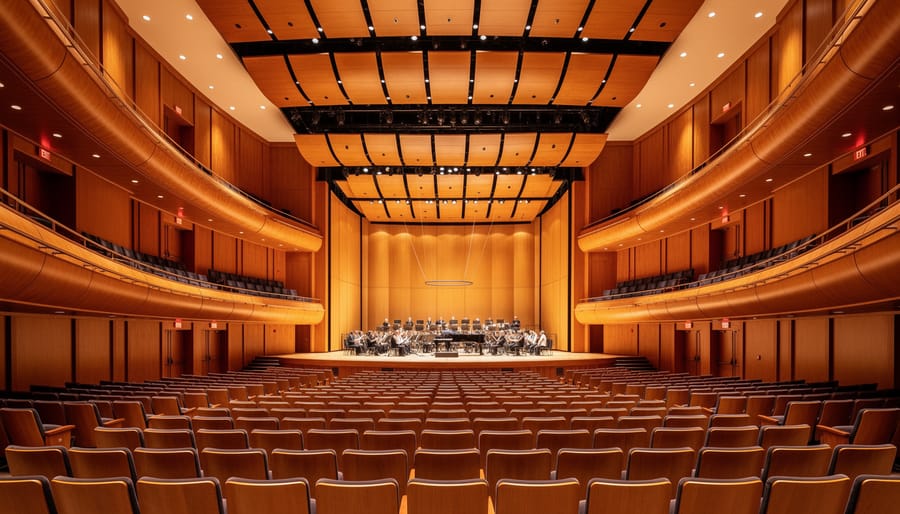
Step into Koerner Hall and you’re immediately enveloped by warm wood, over 800,000 board feet of Douglas fir, maple, and cherry paneling that transforms the space into something between a musical instrument and a sanctuary. Every surface has been crafted with acoustic precision in mind, from the undulating wall panels that diffuse sound to the ceiling’s intricate geometric patterns that prevent echoes while maintaining clarity.
The hall’s most striking feature is its terraced ‘sound balconies’, five ascending tiers that wrap the performance space in a gentle embrace. These aren’t merely decorative flourishes. Each balcony extends the same distance from the stage, creating uniform sound distribution throughout the room. The design draws inspiration from traditional European concert halls while embracing modern acoustic science, a collaboration between Toronto-based KPMB Architects and the legendary acoustician Russell Johnson of ARTEC Consultants.
Johnson, who also designed halls in Birmingham and Tokyo, implemented a ‘shoebox’ configuration that keeps audiences close to performers. No seat sits more than 85 feet from the stage, creating an intimacy that larger venues simply can’t match. This proximity, combined with the hall’s 2.2-second reverberation time, means you hear the full spectrum of sound, the softest breath of a flute, the deepest resonance of a cello, with stunning clarity.
The technical brilliance extends beneath the stage, where adjustable acoustic panels allow technicians to fine-tune the space for different performance types. A solo pianist requires different conditions than a full orchestra, and Koerner Hall adapts seamlessly. This flexibility, paired with meticulous attention to detail during construction, explains why artists from Yo-Yo Ma to Diana Krall praise the venue’s sonic qualities.
The Concert Experience at Koerner Hall
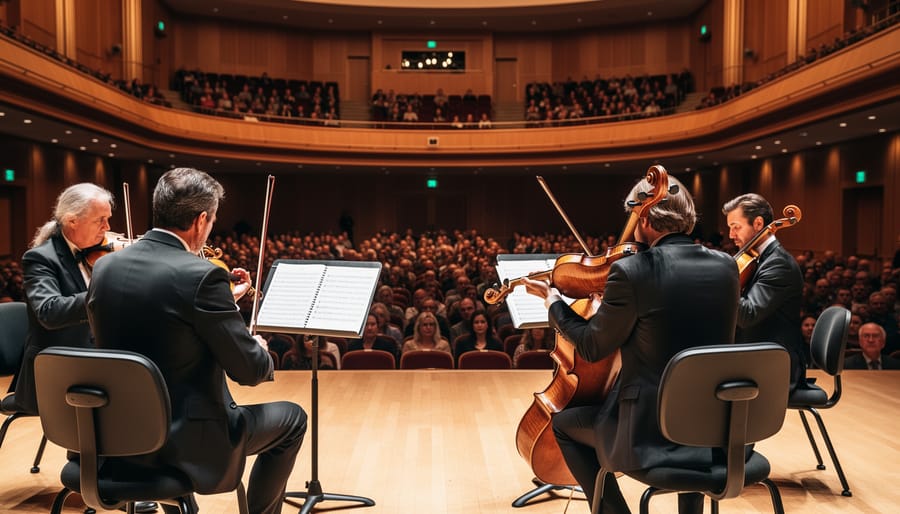
Arriving at Koerner Hall for an evening performance, you’re immediately struck by the warm glow spilling from the lobby’s floor-to-ceiling windows. The pre-concert buzz fills the space as fellow music lovers gather, many sipping wine at the bar while discussing the night’s program. You’ll notice an international mix of accents, this venue draws both seasoned Toronto concertgoers and visitors who’ve planned their entire trip around a single performance.
As the house doors open and you step into the hall itself, the transformation is breathtaking. That first glimpse of the soaring timber walls and cascading balconies never loses its impact, even for regulars. Ushers guide you to your seat, and you settle in, taking in the honeyed wood tones and the anticipation building around you.
The lights dim, and silence falls across the 1,135 seats. When the first note sounds, whether it’s a piano’s delicate opening, a jazz ensemble’s syncopated rhythm, or the rich tones of a visiting orchestra, you understand why musicians speak reverently about this room. Every nuance travels clearly to your ears without amplification overwhelming the natural sound.
The programming diversity means you might witness a world-renowned classical pianist one month, an experimental contemporary ensemble the next, or a celebrated jazz trio bringing the house down with improvisation. World music performances showcase instruments and traditions from across continents, while Canadian artists premiere bold new works that push musical boundaries.
What sets these experiences apart isn’t just the world-class acoustics. It’s the intimacy. Artists can make eye contact with the audience. You see their fingers dance across strings, their breath shaping phrases. This closeness creates moments of genuine connection that larger venues simply can’t replicate, the kind of musical memories travelers carry home and treasure for years.
What to Expect at the Koerner Hall Concert Series
The Koerner Hall Concert Series programming reflects a sophisticated balance between artistic excellence and adventurous curation. Anchored by The Royal Conservatory of Music’s deep musical heritage, the series presents roughly 140 performances annually, spanning genres that extend far beyond conventional classical programming.
The season typically unfolds in thematic clusters. You’ll find multi-concert residencies by acclaimed chamber ensembles, solo recitals by virtuosos at career peaks, and carefully curated world music presentations that might feature anything from Indian classical ragas to Brazilian jazz. The programming committee actively seeks artists who can leverage the hall’s acoustic precision, whether that’s a string quartet exploring Beethoven or a contemporary composer premiering an electroacoustic work.
A signature element is the spotlight on emerging Canadian artists through initiatives like the 21C Music Festival, which pairs established performers with rising talent in innovative programs. These concerts often cost less than marquee international visits while offering equally compelling performances.
International partnerships bring prestigious ensembles and soloists who might otherwise bypass Toronto for larger American markets. Past seasons have featured everyone from renowned pianists touring new recordings to lesser-known but exceptional European baroque ensembles.
The season typically runs September through May, with lighter summer programming. Current schedules appear on The Royal Conservatory’s website about three months ahead, though popular performances sell quickly. Monday and Tuesday evenings often feature more experimental programming, while weekends lean toward broader appeal. Many travelers build Toronto visits around specific concerts, particularly during the dense January-through-March period when programming peaks.
Planning Your Visit
Koerner Hall sits at 273 Bloor Street West in Toronto’s upscale Yorkville neighbourhood, where tree-lined streets meet high-end boutiques and world-class dining. The venue occupies the ground floor of the TELUS Centre for Performance and Learning, just steps from the Royal Ontario Museum and the Gardiner Museum, perfect for pairing your concert with a day of cultural exploration.
| Essential Information | Details |
|---|---|
| Location | 273 Bloor Street West, Toronto (Yorkville) |
| Typical Ticket Range | $35, $150 CAD (varies by performance) |
| Box Office Hours | Mon, Sat 12pm, 6pm (extended on performance days) |
| Parking | On-site garage accessible via Avenue Road |
| Nearby Attractions | ROM, Gardiner Museum, Yorkville galleries, McMichael (45 min north) |
Purchase tickets through the venue’s website or box office; booking ahead ensures better seat selection for popular performances. The hall is fully accessible, with wheelchair seating, assistive listening devices, and accessible washrooms throughout the building.
Arrive thirty minutes early to explore the striking lobby and secure your seat without rushing. Many performances offer pre-concert talks an hour before showtime, these brief presentations from musicians or musicologists add meaningful context to what you’re about to hear.
For dining, Yorkville offers everything from casual cafés to elegant restaurants within a five-minute walk. The neighbourhood transforms beautifully after dark, making it ideal for a pre-concert stroll. If you’re planning a broader Ontario arts itinerary, the Group of Seven art trail connects Toronto with Kleinburg’s McMichael gallery, where you can dive deeper into the Group of Seven legacy. Consult the McMichael visit guide for practical details on that journey.
Public transit connects easily via the Bay or Museum subway stations, both under a ten-minute walk away.
Beyond the Concert: The TELUS Centre Experience
Koerner Hall anchors the TELUS Centre for Performance and Learning, a space that does far more than host concerts. The Royal Conservatory of Music operates this five-story cultural hub as both a world-class performance venue and a thriving educational institution, creating a rare synergy between professional artistry and music education.
Walk through the building on a weekday afternoon and you’ll hear practice rooms humming with student rehearsals, masterclasses in session, and teaching studios where the next generation of musicians hones their craft. This isn’t simply a concert hall that sits dark between shows. It’s a living ecosystem where aspiring cellists and seasoned professionals share the same hallways, where community education programs welcome students of all ages, and where the line between performer and audience blurs through workshops and open rehearsals.
The Conservatory occasionally offers guided tours that reveal the architectural ingenuity behind the acoustics, take you backstage, and explain the rigorous artist-in-residence programs that bring world-renowned musicians to teach and perform. Even without a formal tour, arriving early to explore the public spaces rewards curious travelers. The building’s design invites lingering, with sight lines into practice areas and common spaces that celebrate music-making as a communal act.
For culturally-minded visitors, this context matters. You’re not just attending an isolated performance. You’re stepping into an institution that shapes Canada’s musical landscape, supports emerging artists, and treats music as both high art and accessible human expression.
Common Questions About Visiting Koerner Hall
First-time visitors often wonder what to expect when attending a performance at Koerner Hall. While each concert brings its own unique atmosphere, some practical considerations remain consistent across all events.
What should I wear to a performance at Koerner Hall?
There’s no strict dress code, though many patrons opt for smart casual to business attire. You’ll see everything from jeans to cocktails dresses, so wear what makes you comfortable while respecting the occasion.
How early should I arrive before the show?
Plan to arrive 30-45 minutes before curtain time to collect tickets, find your seat, and settle in without rushing. This also gives you time to explore the stunning architecture and perhaps grab a drink.
How long do concerts typically last?
Most performances run 90 minutes to two hours, often with a 15-20 minute intermission. Check your specific event details when booking, as some recitals may be shorter while full orchestral programs can extend longer.
Is photography allowed during performances?
Photography and recording are generally prohibited once the performance begins, though you’re welcome to photograph the hall itself before the show and during intermission.
What truly sets Koerner Hall apart from other Toronto venues is the intimacy combined with world-class acoustics. Unlike larger concert halls where you might feel distant from performers, the wood-wrapped design here ensures remarkable clarity from every angle. The sound balconies create an enveloping acoustic experience that’s been compared to being inside a finely-crafted musical instrument. Accessibility features include wheelchair-accessible seating, assistive listening devices, and elevators to all levels, making the venue welcoming to all visitors.